
You are using an out of date browser. It may not display this or other websites correctly.
You should upgrade or use an alternative browser.
You should upgrade or use an alternative browser.

Is Lube Locker any good?
- Thread starter JRUBIC0N
- Start date

Yes Lube Lockers work great unless its seating surface is flawed where they don't do so well. My Rubicon's rear Dana 44 seals fine with a Lube Locker but not the front axle that I spent a lot of time on trying to get the Lube Locker to seal it too. I ended up sealing that axle with RTV, I gave up on the Lube Locker. Its seating surface looked to have to flaws the Lube Locker couldn't cope with.
GL-5 for sure, pretty much any viscosity from 70W-80 up will be fine. I do recommend a conventional GL-5 gear lube after I learned my new gears ran too hot with a synthetic GL-5. It was discovered by aftermarket gear & axle manufacturers that new gears do run significantly hotter with synthetics. Your gears aren't new so you wouldn't have that issue with them but they'd still run cooler with a conventional. Personally I run Valvoline but any good brand like Torco, Castrol, Mobil, etc.
P.S. Both Revolution Gear and Currie instruct to use only conventional gear lubes.
GL-5 for sure, pretty much any viscosity from 70W-80 up will be fine. I do recommend a conventional GL-5 gear lube after I learned my new gears ran too hot with a synthetic GL-5. It was discovered by aftermarket gear & axle manufacturers that new gears do run significantly hotter with synthetics. Your gears aren't new so you wouldn't have that issue with them but they'd still run cooler with a conventional. Personally I run Valvoline but any good brand like Torco, Castrol, Mobil, etc.
P.S. Both Revolution Gear and Currie instruct to use only conventional gear lubes.

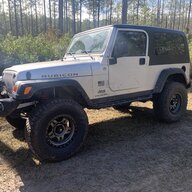
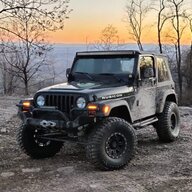
Yes Lube Lockers work great unless its seating surface is flawed where they don't do so well. My Rubicon's rear Dana 44 seals fine with a Lube Locker but not the front axle that I spent a lot of time on trying to get the Lube Locker to seal it too. I ended up sealing that axle with RTV, I gave up on the Lube Locker. Its seating surface looked to have to flaws the Lube Locker couldn't cope with.
GL-5 for sure, pretty much any viscosity from 70W-80 up will be fine. I do recommend a conventional GL-5 gear lube after I learned my new gears ran too hot with a synthetic GL-5. It was discovered by aftermarket gear & axle manufacturers that new gears do run significantly hotter with synthetics. Your gears aren't new so you wouldn't have that issue with them but they'd still run cooler with a conventional. Personally I run Valvoline but any good brand like Torco, Castrol, Mobil, etc.
P.S. Both Revolution Gear and Currie instruct to use only conventional gear lubes.
Do you ever take your covers off? Or just drain the fluid and check the drain plug magnet?
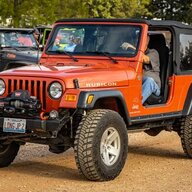
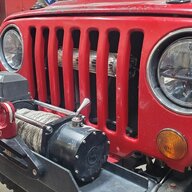
Be my guest on that, I don't really care that it says that. It doesn't specify Zerex G-05 coolant or Autolite XP-985 spark plugs either. And the sticker on my door jamb stops at 31x10.50 tires.The owners manual calls for synthetic in the rear rubicon differential.
I got talked into using synthetic (against my own thinking) with a new set of 5.38 gears and the rears burned up somewhere not much over a couple thousand miles. That was with a change to more synthetic at 500 miles and driving SLOW never at highway speeds until the break-in was over.
I took it the local SoCal gear-guru (truly, that's all he does) and as soon as he got the carrier out and looked at the gears he yelled at me for using synthetic oil with my new gears. I hadn't even told him that's what I used, he just knew from looking at them. He showed me the heat damage and that made sense from all the requirements on the use of conventional only from companies like Currie and Revolution gear. He confirmed the actual gear setup I drove in there with was fine.
Synthetic will work fine with factory gears but you really should use conventional if you install new gears. But even the factory gears will run cooler with a conventional gear lube. Even with factory gears I'd rather keep them running cooler with a conventional so that's what I do. That's why Currie, Dynatrac, etc. all require the use of conventional gear lubes to keep their warranties in effect, it's because they had so many R&P failures from buyers of their axles running on synthetic gear lubes they swapped in for the conventional they did the initial fill with.
This from Revolution Gear at https://www.revolutiongear.com/ring_and_pinion_break_procedure
"Recommended gear oil is an 80W-90 or 85W-140, Non-Synthetic, GL5 grade or Higher, Name Brand Oil."
Synthetic is great for many uses but it's not the right stuff for everything. Factory gears? It's fine. But they're the only gears I'd even consider running it with. But if I bought a second Rubicon with the factory gears? I'd fill those axles right up with fresh 85W-140 conventional GL-5, what I'm running now.

I can't speak to 44s, but 30s and 35s do not. Which is exactly why I changed my diff covers to ones with drain plugs...Do non Rubicon 44s and D30s have a drain plug?

Honestly in that short amount of miles it sounds like the gears weren't set up right.I got talked into using synthetic (against my own thinking) with a new set of 5.38 gears and the rears burned up somewhere not much over a couple thousand miles. That was with a change to more synthetic at 500 miles and driving SLOW never at highway speeds until the break-in was over.
I have set up many gearsets, new and used gears. I have used synthetic and conventional lubes. Never had a bearing or gear failure using either. Lucky? Maybe, but most likely not. Just proper gear set up. I have found over the years, the steeper the gear ratio, the more backlash I set the gears up with. A lower ratio gear set turns faster, and builds more heat. As the ring and pinion heat up, you lose backlash on the gears. When the backlash gets too tight, there go your gears. Use whatever lube is recommended, but most likely any quality lube will be fine.
Yep you guys are right and companies like Currie, Revolution Gear, and Dynatrac who say to only use conventional are all wrong.
I had a private 30 minute conversation with John Currie about this 12-15 years and he went through the whole thing... saying the entire aftermarket industry was shocked to track their (hardcore uses) r&p problems down to the use of synthetic gear lubes.
And yes it was confirmed my previous gears were set up properly. And as already said above, the gear guy who removed them confirmed the pattern was fine... they had just gotten too hot despite a very (!) conservative break-in process and gear lube changes. Those were my third set of gears... 4.10, 4.88, and now 5.38. The first two never had a problem with conventional.
Call John Currie to hear it first-hand since you're not liking what I said.
Check this out from Currie... https://www.currieenterprises.com/why-run-conventional-gear-oil
And make no mistake... the less hard you push your axles the less it matters. The harder you push them the more it absolutely matters.
You can call BS all.... you... want. Do whatever you want with your own gears.
I had a private 30 minute conversation with John Currie about this 12-15 years and he went through the whole thing... saying the entire aftermarket industry was shocked to track their (hardcore uses) r&p problems down to the use of synthetic gear lubes.
And yes it was confirmed my previous gears were set up properly. And as already said above, the gear guy who removed them confirmed the pattern was fine... they had just gotten too hot despite a very (!) conservative break-in process and gear lube changes. Those were my third set of gears... 4.10, 4.88, and now 5.38. The first two never had a problem with conventional.
Call John Currie to hear it first-hand since you're not liking what I said.
Check this out from Currie... https://www.currieenterprises.com/why-run-conventional-gear-oil
And make no mistake... the less hard you push your axles the less it matters. The harder you push them the more it absolutely matters.
You can call BS all.... you... want. Do whatever you want with your own gears.

I've used lube locker gaskets front and rear for years. I've taken the covers off multiple times. No leaks. Way more convenient than RTV.
I have had shops say negative things about them. I'll stick with them until something better comes along.
I have had shops say negative things about them. I'll stick with them until something better comes along.
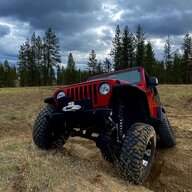
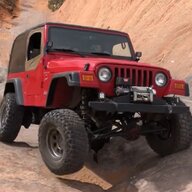
Another vote for using conventional fluid only. When I was getting a quote from a local rear end shop I was asking about running a lunchbox locker in my dana 30 (powertrax no-slip) and if it had a preference over conventional/synthetic. I was told synthetic would help it run a little bit smoother, BUT he did tell me that synthetics generate more heat and they actually eat through axle seals and pinion seals faster than conventional fluid does.
Similar threads

- Replies
- 12
- Views
- 4,240


- Replies
- 39
- Views
- 10,367

- Replies
- 15
- Views
- 7,482


- Replies
- 6
- Views
- 2,753


