Galvanic corrosion will generally occur between any pair of dissimilar metals. The rate at which it occurs depends upon the galvanic potential as described in a galvanic series. Stainless steels are generally far higher in a galvanic series than either carbon steel or aluminum, and will generally result in significant galvanic corrosion of either of the two materials.
Aluminum and carbon/plain steel are quite close in the galvanic series, and typically there is only small increase in the corrosion rate of the steel when the two metals are used together.
Also note that zinc is one of the most aggressively corroded metals in the chart, and that it will corrode long before the other metals. This is how zinc playing can protect a fastener or adjacent material, even if the coating is chipped. It is considered a sacrificial anode, meaning it corrodes in order to protect the surrounding metal. It works very well with carbon/plain steels, and to a lesser degree aluminum. It generally does not work well with stainless steels as the very large potential difference results in very rapid consumption of the zinc plating.
Zinc is often used as a sacrificial anode on boats and other metal underwater structures as its corrosion prevents the corrosion of surrounding metal.
Note that in order for galvanic corrosion to occur between two or more dissimilar metals, two conditions must be met. The dissimilar metals must be electrically connected, and also immersed in the same electrolyte. If either condition is broken, galvanic corrosion stops (however corrosion may continue in other forms).
In the case of most automobiles, they tend to operate above water, and not in it. The electrolyte can often be the air itself, which is not very conductive, though the presence of large amounts of moisture and salt particles can make it more conductive. Salt spray from the road can create a film of conductive electrolyte that vastly increases galvanic corrosion.
In automotive design (as well as many other engineering disciplines), great care is taken to electrically isolate dissimilar metals. This is why Ford and other manufacturers of aluminum-bodied steel-framed cars forbid anything that could electrically couple the body and the frame. If the two materials are properly isolated, no galvanic corrosion occurs (again, other types of corrosion can still take place).


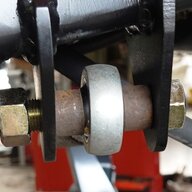
Ive been told by numerous "bolt" suppliers" when in the Gov sector most all SS hardware you'll find at the local stores (TDH?? brand) is considered G5. Working at a coastal water plant I will say is if you plan on dismantling what ever you use them om and dont use anti seize they gall easily and will destroy threads.