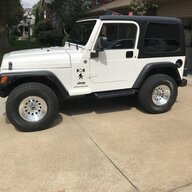
It sounds like you're getting your antenna knowledge from catalogs like Crutchfield when you keep pushing "amplified antennas". Antennas made smaller for appearance reasons produce weaker noisier signals, amplifiers amplify that extra noise too just as much as the amplify the signal. Antennas at the correct length for the frequency being received (yes the length counts for receiving too, not just transmitting) produce the strongest signals that are also less noisy.
I designed my first antenna, a 15 meter "beam" antenna back in the mid-60's, then took 4 years of electronics & RF schooling, then took care of large HF, VHF, and UHF antenna farms and radio sites. I built and erected many antennas including for the USAF while in their HF/VHF/UHF RF communications units. I'm still active in it with a general class ham radio license, as well as of course CB for the Jeep. I have a good foundation of education in antennas so I'm not just repeating what I have read in catalogs or heard. Small "amplified" antennas for AM/FM car radios don't work worth a crap and that's why even when you can't see them, length-appropriate antennas are still there.... usually something like 38". If you think adding an amplifier to a miniaturized antenna is going to be as effective and something that can be recommended, I just can't agree with you. Not to mention the front-end of receivers have RF amplifiers to amplify the signal from the antenna already. Connecting an antenna with the correct length to it gives a lower noise signal to work with producing a better received signal.
There are no short cuts to antennas and no magic way to make miniaturized antennas work well at AM/FM (HF/VHF) frequencies. If there was, you would (again) not see big antenna towers and big antennas on top of structures made to support them. If there was no need for full size antennas, if we could get away with tiny antennas, we wouldn't be seeing antennas everywhere on the top of service vehicles, antenna towers, buildings, naval ships, etc.