Teflon tape on this CO2 tank connection?

nathanotis

TJ Enthusiast
Original poster
Joined
Jan 26, 2019
Messages
481
Location
Colorado Springs
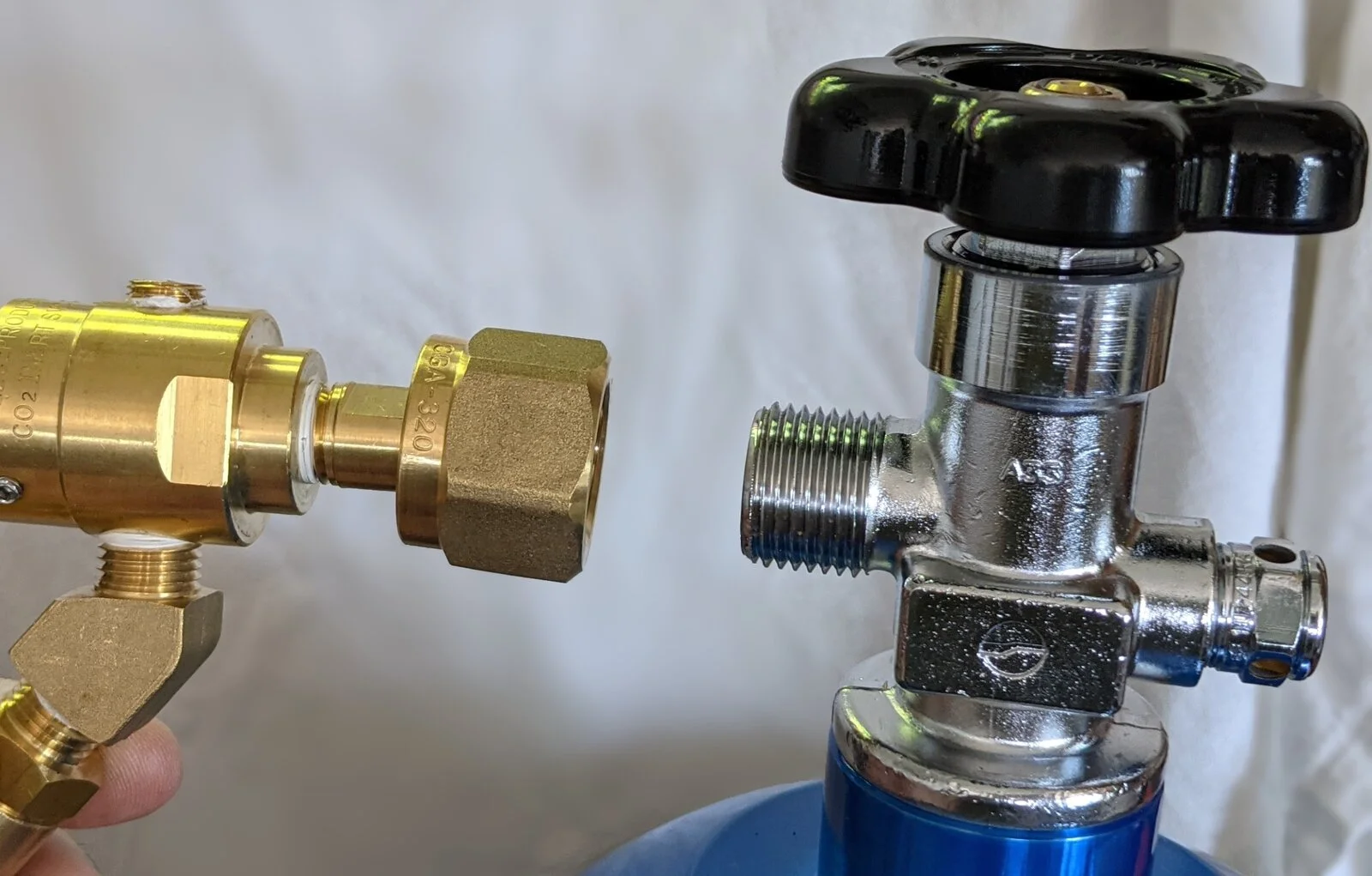
Am I correct in thinking there should NOT be a need to use teflon tape on *this* connection from my tank to the regulator?

There *IS* a hard plastic washer/gasket in the regulator itself.

PXL_20211003_181452862.PORTRAIT~2.webp
 
  • Like
Reactions: Kid Mechanic
Try without tape and spray it to test for leaks. It should be fine and that way you don't have to explore the whole, will tape screw up the regulator debate.
 
  • Like
Reactions: nathanotis
Am I correct in thinking there should NOT be a need to use teflon tape on *this* connection from my tank to the regulator?

There *IS* a hard plastic washer/gasket in the regulator itself.

View attachment 281078
You have 4 examples of tapered pipe thread in the pic that need thread sealant. Straight threads do not get thread sealant ever. Regulator to tank connection is straight thread.
 
Using Teflon tape as a sealant is not a good practice. It is actually a lubricant, although it can clog the pipe threads. See here: https://www.plantengineering.com/articles/guidelines-for-choosing-a-pipe-thread-sealant/ for more details.

Excerpt:
Teflon tape

The purpose of this white, nonsticking tape is to serve as a lubricant when threaded parts of a piping system are being assembled. The inherent slipperiness of the material makes assembly easier.

Strictly speaking, Teflon tape is not a thread sealant (Fig. 1). The tape may have the effect of clogging the thread path, but it does not actually adhere to surfaces as a true sealant should. During installation, the tape must be carefully wrapped in the direction of the threads or it unravels and tears.

Advantages . Teflon tape can be applied quickly with no mess. It supplies sufficient lubrication to enable pipe system components to be easily assembled without damage to threads. The product is easy to carry and store, and has an indefinite shelf life.

Disadvantages . Teflon tape does not adhere to thread flanks, and does not provide a secure seal. Because the tape is thin and fragile, it is prone to tearing when pipes are being assembled and tightened. Bits of torn tape can migrate into a fluid system, clogging valves, screens, and filters. Teflon tape may be dislodged during pipe adjustments, allowing leak paths to form.

Recommended uses . Widely used in plumbing, this material is adequate for assembling standard water pipes and fittings. Teflon tape offers no resistance to vibration and should be avoided in high-pressure systems.

Anaerobic resin compounds

Anaerobic resin compounds use a different cure chemistry than solvent-based pipe dopes and do not contain solvents. The cure begins when the sealant is confined within the threads of the metal pipe connection and air is excluded.

Without solvent content, the cured material does not shrink or crack, and maintains its sealing properties even after heat aging. Because of their chemistry, anaerobic resin compounds exhibit excellent temperature and solvent resistance.

Advantages . Anaerobic compounds fill the voids between pipe threads, creating a seal (Fig. 2). The compounds cure slowly, providing additional time to make adjustments to pipe system components without damaging the seal. Once cured, the compounds form a strong seal that resists the effects of temperature, pressure, solvents, and vibration.

While some sealants produce bonds that make disassembly difficult, joints sealed with anaerobic resins can be taken apart with standard hand tools. Many anaerobic thread sealants contain Teflon or similar lubricants which aid assembly and reduce the potential for damage to pipe system components.

Disadvantages. Because of their chemical composition, compatibility of anaerobic resin compounds with plastic pipe and fittings should be verified before use. Although these compounds cure sufficiently for many immediate uses, a 24-hr period should be observed before activating high-pressure systems or allowing significant shock or vibration. Anaerobic resins can be difficult to remove from clothing or gloves.

Recommended uses. This class of sealants provides the strongest, longest-lasting seal presently available. They are recommended for temperatures up to 300 F, pressures up to 10,000 psi, and where vibration will be encountered. These sealants are the choice when installers must make minor adjustments to a piping system.

— Edited by Joseph L. Foszcz, Senior Editor, 847-390-2699, [email protected]

 
Using Teflon tape as a sealant is not a good practice. It is actually a lubricant, although it can clog the pipe threads. See here: https://www.plantengineering.com/articles/guidelines-for-choosing-a-pipe-thread-sealant/ for more details.

Excerpt:
Teflon tape

The purpose of this white, nonsticking tape is to serve as a lubricant when threaded parts of a piping system are being assembled. The inherent slipperiness of the material makes assembly easier.

Strictly speaking, Teflon tape is not a thread sealant (Fig. 1). The tape may have the effect of clogging the thread path, but it does not actually adhere to surfaces as a true sealant should. During installation, the tape must be carefully wrapped in the direction of the threads or it unravels and tears.

Advantages . Teflon tape can be applied quickly with no mess. It supplies sufficient lubrication to enable pipe system components to be easily assembled without damage to threads. The product is easy to carry and store, and has an indefinite shelf life.

Disadvantages . Teflon tape does not adhere to thread flanks, and does not provide a secure seal. Because the tape is thin and fragile, it is prone to tearing when pipes are being assembled and tightened. Bits of torn tape can migrate into a fluid system, clogging valves, screens, and filters. Teflon tape may be dislodged during pipe adjustments, allowing leak paths to form.

Recommended uses . Widely used in plumbing, this material is adequate for assembling standard water pipes and fittings. Teflon tape offers no resistance to vibration and should be avoided in high-pressure systems.

Anaerobic resin compounds

Anaerobic resin compounds use a different cure chemistry than solvent-based pipe dopes and do not contain solvents. The cure begins when the sealant is confined within the threads of the metal pipe connection and air is excluded.

Without solvent content, the cured material does not shrink or crack, and maintains its sealing properties even after heat aging. Because of their chemistry, anaerobic resin compounds exhibit excellent temperature and solvent resistance.

Advantages . Anaerobic compounds fill the voids between pipe threads, creating a seal (Fig. 2). The compounds cure slowly, providing additional time to make adjustments to pipe system components without damaging the seal. Once cured, the compounds form a strong seal that resists the effects of temperature, pressure, solvents, and vibration.

While some sealants produce bonds that make disassembly difficult, joints sealed with anaerobic resins can be taken apart with standard hand tools. Many anaerobic thread sealants contain Teflon or similar lubricants which aid assembly and reduce the potential for damage to pipe system components.

Disadvantages. Because of their chemical composition, compatibility of anaerobic resin compounds with plastic pipe and fittings should be verified before use. Although these compounds cure sufficiently for many immediate uses, a 24-hr period should be observed before activating high-pressure systems or allowing significant shock or vibration. Anaerobic resins can be difficult to remove from clothing or gloves.

Recommended uses. This class of sealants provides the strongest, longest-lasting seal presently available. They are recommended for temperatures up to 300 F, pressures up to 10,000 psi, and where vibration will be encountered. These sealants are the choice when installers must make minor adjustments to a piping system.

— Edited by Joseph L. Foszcz, Senior Editor, 847-390-2699, [email protected]

What I do know is if I use high quality thread sealant to seal pipe threads and then have to tighten it some, it has to come fully apart and new sealant applied. If I use tape and do the same, it doesn't leak.