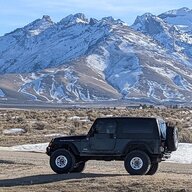
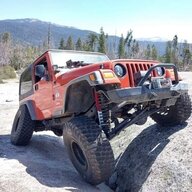
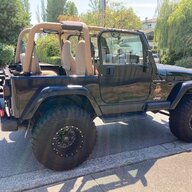
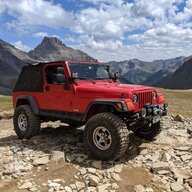
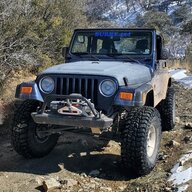
Is that with HD front bumper and winch?CE-9132-FP 16.25" end to end coil length.
Exactly.
The Rockjock springs will sit an inch different on two rigs that have 140 pounds difference between them on the front axle. Those 4.5" RE springs could take over 400 pounds difference to make that much change in ride height.
Whether or not it's intentional, it reflects a different philosophy between the two companies. Rockjock is trying to produce a spring with the best travel potential including rigs with midarms and shock relocations at the cost of variability in ride height results, while RE is trying to produce a spring that provides the most consistent ride height regardless of the rig configuration, at the cost of needing spring retainers to keep the coils from falling out when paired with anything as long or longer than an 11" Rancho.
Wouldn’t that affect ride quality? I know most of ride quality is in shocks, but 70lbs of compression means they’d move more from the psi impact of a speed bump. Where as hitting a speed bump at the same speed and same psi pressure upwards, wouldn’t compress a spring with 140 lbs of compression thus lifting the tub of the vehicle sitting on that spring more.
Surely a lower spring rate will translate to a smoother ride on logging roads at any kind of speed.
Wouldn’t that affect ride quality? I know most of ride quality is in shocks, but 70lbs of compression means they’d move more from the psi impact of a speed bump. Where as hitting a speed bump at the same speed and same psi pressure upwards, wouldn’t compress a spring with 140 lbs of compression thus lifting the tub of the vehicle sitting on that spring more.
Surely a lower spring rate will translate to a smoother ride on logging roads at any kind of speed.
Say in either case the speed bump is 2" tall and 12" wide, and you're going 25mph. One set of springs applies 260lbs more pressure to the frame, for 1/36th of a second. If you had no shocks, it wouldn't even be perceptible beyond a soft, relatively slow bounce. On the other hand, the shocks respond to piston speed. That piston just tried to move 2" in 1/72nd of a second, which is pretty dang fast, and the viscosity of the oil just isn't gonna let that happen, so the piston moves as fast as it's able and the excess gets transferred to the chassis.

So by that reasoning, the quality of the piston of the shock is in the speed the faster the reaction of the piston, the less is transferred to the chassis.
I’m just thinking, the spring exerts force both up and down, so it can compress both up and down. So hitting a speed bump would temporarily compress it from the bottom. If the vehicle rests on it then it will compress
Shocks and sway bars control the movements.
So by that reasoning, the quality of the piston of the shock is in the speed the faster the reaction of the piston, the less is transferred to the chassis.

I’m just thinking, the spring exerts force both up and down, so it can compress both up and down. So hitting a speed bump would temporarily compress it from the bottom. If the vehicle rests on it then it will compress