Radiator replacement

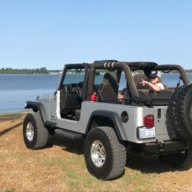
I just helped a buddy replace his TJ radiator. Tried out my new radiator fill/burp bucket out for the first time. Spill free and the easiest way to let the cooling system purge itself of air. There may be others like this unit that are better, but this worked fine. His cooling system was all new except for the radiator. New radiator dropped it 10°. No visible signs of malfunction, just all there was left that wasn't fresh. I knew we could get it cooler.

https://www.amazon.com/gp/product/B01I40ZQWE/?tag=wranglerorg-20
I bought the same one a few months ago, it worked great.
 
  • Like
Reactions: pagrey
Pointing it uphill and then let it warm up to let the thermostat open and you should have any air pocket burped out. Have the heater on inside too. If you have a steep enough hill you should be good to go. 👍
 
Pointing it uphill and then let it warm up to let the thermostat open and you should have any air pocket burped out. Have the heater on inside too. If you have a steep enough hill you should be good to go. 👍
Heater on or off makes exactly zero difference. There is no heater control valve on the fluid side. The coolant circulates at the same rate through the heater core no matter what the dash controls say.
 
  • Like
Reactions: jazngab
Heater on or off makes exactly zero difference. There is no heater control valve on the fluid side. The coolant circulates at the same rate through the heater core no matter what the dash controls say.
If I fill up the coolant doing the hill method, can the entire 10.5 quarts be poured thru the rad cap with any leftover going into the reservoir? I’ve read things from fill up the heater core first using a funnel and the heater hose then fill the rad or buy the funnel burp kit. What is the way you @mrblaine do it if filling up following a complete drain?
 
If I fill up the coolant doing the hill method, can the entire 10.5 quarts be poured thru the rad cap with any leftover going into the reservoir? I’ve read things from fill up the heater core first using a funnel and the heater hose then fill the rad or buy the funnel burp kit. What is the way you @mrblaine do it if filling up following a complete drain?
I don't know. I don't do it that way, I don't measure it that close. I mix up a couple of gallons of coolant, fill it, run it until the thermostat opens, make sure it is circulating correctly, top off as needed, cap it, fill the reservoir, good to go.
 
  • Like
Reactions: Jerry Bransford
I don't know. I don't do it that way, I don't measure it that close. I mix up a couple of gallons of coolant, fill it, run it until the thermostat opens, make sure it is circulating correctly, top off as needed, cap it, fill the reservoir, good to go.
Pardon my lack of knowledge, but how can you tell when the thermostat opens up? And what temp should it be opening? 180 degrees?
 
Pardon my lack of knowledge, but how can you tell when the thermostat opens up? And what temp should it be opening? 180 degrees?
The correct thermostat opens at 195 degrees, that's the temperature rating the thermostat should have. Don't run a lower temperature model for any reason, the computer is programmed around that temperature and the engine runs cleaner at that temperature too
 
The correct thermostat opens at 195 degrees, that's the temperature rating the thermostat should have. Don't run a lower temperature model for any reason, the computer is programmed around that temperature and the engine runs cleaner at that temperature too
I bought the Stant one that was recommended here. How can you tell when the thermostat opens up?
 
I bought the Stant one that was recommended here. How can you tell when the thermostat opens up?

Often you can tell by the change in temperature of the top hose as the flow of hot coolant increases through the open thermostat. (But not always.)

When I was young, in another century a long time ago, I was taught to put new thermostats in a pan of water on the stove before installation and measure the temperature when the thermostat begins to open and again when it is fully open to ensure that it is operating as it should.

However, I can't say that I always do what I've been taught.
 
According to Stant's website, thermostats start to open at their rated temperature, but are not typically fully open until 15 to 20 deg above that.
 
If it doesn't open you would overheat. I have seen plenty of brand new t-stats not work, but usually the simple design is fool-proof. Bi-metalic coil that expands and contracts at different temperatures which cause the t-stat to open and close. My personal advise is: The very newest original TJ cooling system is 13 years old. Age alone makes it advisable to change all the bits in your system. Water pump, belts, hoses, idler pulley, tensioner, fan clutch, sending unit, T-stat and even the radiator. While some may say do not replace functioning parts, age puts them at risk and they rarely fail in your garage. Freshen it up and forget about it for 5 years. You can always make more money, but it is hard to reverse the damage or annoyance of a component failure.

 
If it doesn't open you would overheat. I have seen plenty of brand new t-stats not work, but usually the simple design is fool-proof. Bi-metalic coil that expands and contracts at different temperatures which cause the t-stat to open and close. My personal advise is: The very newest original TJ cooling system is 13 years old. Age alone makes it advisable to change all the bits in your system. Water pump, belts, hoses, idler pulley, tensioner, fan clutch, sending unit, T-stat and even the radiator. While some may say do not replace functioning parts, age puts them at risk and they rarely fail in your garage. Freshen it up and forget about it for 5 years. You can always make more money, but it is hard to reverse the damage or annoyance of a component failure.

I was far from home when my Jeep overheated and although I was fortunate to drive it home, it was stressful. I’ve since replaced all the parts mentioned (minus pulley and tensioner) and decided I will most likely get a AAA premium membership for peace of mind since I am driving a 17 year old vehicle.

For those who have replaced the radiator with the Mopar replacement, did you find that the fan shroud screws did not fit into the new radiator? I found that to be very annoying since it was the last part putting it all back together. It’s held in right now with some drywall anchors until I can get some nuts and bolts that fit from the store.
 
  • Like
Reactions: DrDmoney
For those who have replaced the radiator with the Mopar replacement, did you find that the fan shroud screws did not fit into the new radiator? I found that to be very annoying since it was the last part putting it all back together. It’s held in right now with some drywall anchors until I can get some nuts and bolts that fit from the store.
Yep, just had this same problem. I put a socket on a small 18V cordless drill I have and with a little ass behind it was able to get them to go in. The drivers side bottom was the hardest by far and took me close to an hour 🤬
 
  • Like
Reactions: jazngab
Yep, just had this same problem. I put a socket on a small 18V cordless drill I have and with a little ass behind it was able to get them to go in. The drivers side bottom was the hardest by far and took me close to an hour 🤬
I considered drilling the holes bigger but I already installed the rad and I’m too lazy to remove it again. I don’t think I can fit a drill in there. Hard enough with a ratchet. Figured easiest solution is smaller bolts and using nuts to tighten. Eh. It’s just holding the shroud in place.
 
I considered drilling the holes bigger but I already installed the rad and I’m too lazy to remove it again. I don’t think I can fit a drill in there. Hard enough with a ratchet. Figured easiest solution is smaller bolts and using nuts to tighten. Eh. It’s just holding the shroud in place.
The screws that hold the shroud to the flanges on the radiator are self threading. If you look at the holes, they are punched to extrude them so there is basically an unthreaded tube. A bit of force with an impact driver spins them right in.
 
  • Like
Reactions: 04 LJ
I bought the Stant one that was recommended here. How can you tell when the thermostat opens up?
Watch the coolant with the cap off. It is fairly static until the thermostat opens and then you'll see more dramatic changes in level and turbulence.
 
If it doesn't open you would overheat. I have seen plenty of brand new t-stats not work, but usually the simple design is fool-proof. Bi-metalic coil that expands and contracts at different temperatures which cause the t-stat to open and close. My personal advise is: The very newest original TJ cooling system is 13 years old. Age alone makes it advisable to change all the bits in your system. Water pump, belts, hoses, idler pulley, tensioner, fan clutch, sending unit, T-stat and even the radiator. While some may say do not replace functioning parts, age puts them at risk and they rarely fail in your garage. Freshen it up and forget about it for 5 years. You can always make more money, but it is hard to reverse the damage or annoyance of a component failure.

Right theory, wrong methodology. Thermostats by and large for our engines are of the wax pellet type. The pellet expands and contracts at various temps to move the valves that control the flow of coolant.
 
Everything seems to in good working order. Doing this overhaul made me understand the cooling system much better. But I’m almost convinced that my overheat was not mechanical issue but maybe a fluid issue. When the engine is running at operating temp, should there be fluid in the reservoir tank? When I overheated my reservoir was bone dry. But when I drained the system I got back what seemed to be two or so gallons. So I’m wondering if I was low on coolant at the time.
 
So basically when I’m done reassembling the cooling system, just back it out of the garage, put the front end on a hill then fill up 10.5 qt of the coolant in the radiator and that will eliminate any air in the system? No other tricks needed? Also it should be ok driving 20 ft without coolant to a hill, right? As long as the engine doesn’t run long enough to get warm

The hill trick doesn't work. The radiator can appear full but the system can be up to a gallon low.
 
The hill trick doesn't work. The radiator can appear full but the system can be up to a gallon low.
I used the hill trick as a way to minimize air being introduced into the system. I added slightly more than 2.5 gallons of 50/50 GO2. On flat ground the radiator is full when cool.