Does control arm bushing composition affect ride quality or NVH?

I am new to this but wouldn't 5.5" lift short arm to a 4.5" short arm require a spring change at a minimum? And possibly a shock change? If you changed shocks and/or springs it is not a very good comparison. I met a guy with a long arm on the trail that claimed that changing from short arms was the best mod he has made. He used the same shocks and springs and claimed street manners were much improved. He also had control arms with solid heim joints and claimed harshness was no issue.

Depending on the style of longer arms, there are reasons why certain manners could change while keeping the same springs or shocks. None have anything to do with the actual length of the arms and are more related to the amount of inherent bind in the suspension. Knowing what he meant by improvement would be useful to know.

There is more to discuss over there, but a good intro to why this might be is in the recent Long Arms vs Short Arms thread.
 
The TB doesn't see the same loads a control arm does. ....

I've been thinking about this statement. Any time the Jeep is cornering, the track bars experience a load. The harder/faster the turn, the harder that load. The front track bar is also what resists the steering forces making the wheels turn rather than letting the axle shift side to side. Remove one side of the track bar and turn the steering wheel to see what actually happens. On my front 3 link with JJs and no inherent bind, the only thing keeping the body from flopping to the side is my Metalcloak track bar. The loads on the rear would be very similar. The point being that the loads on the track bars are not at all insignificant.

Again I ask, if the suspension link bushings or joints really do have a meaningful impact in the transmission of NVH into the body, then why does Metalcloak (of all companies) not treat their own track bars in a similar manner as their control arms? Why one type of link and not the other?

And to be very clear, this is not simple brand bashing. This is trying to understand how our Jeeps actually work in the real world outside of a marketing department. Metalcloak has built a significant part of it's reputation on the very premise of this thread. Many have made their control arm decision on this promise.

If their track bars are not designed to reduce NVH (quite the opposite with the rear as demonstrated by the Metalcloak's very own shaker table (?!)), then are their control arms really doing what Metalcloak claims in that same regard? Do any control arms (or track bars) have the ability to reduce our sensation of NVH when compared to another?
 
Last edited:
  • Like
Reactions: zebra12
I've been thinking about this statement. Any time the Jeep is cornering, the track bars experience a load. The harder/faster the turn, the harder that load. The front track bar is also what resists the steering forces making the wheels turn rather than letting the axle shift side to side. Remove one side of the track bar and turn the steering wheel to see what actually happens. On my front 3 link with JJs and no inherent bind, the only thing keeping the body from flopping to the side is my Metalcloak track bar. The loads on the rear would be very similar. The point being that the loads on the track bars are not at all insignificant.

Again I ask, if the suspension link bushings or joints really do have a meaningful impact in the transmission of NVH into the body, then why does Metalcloak (of all companies) not treat the track bars in a similar manner as the control arms? Why one type of link and not the other?

And to be clear, this is not simple brand bashing. This is trying to understand how our Jeeps actually work in the real world outside of a marketing department. Metalcloak has built a significant part of it's reputation on the very premise of this thread. Many have made their control arm decision on this promise.

If their track bars are not designed to reduce NVH (quite the opposite with the rear), then are their control arms really doing what Metalcloak claims in that same regard? Do any control arms have the ability to reduce our sensation of NVH when compared to another?
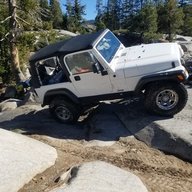
If you want an example of track bars under load, just take a closer look at @jjvw's profile pic! :)

Just looking at the Metalcloak track bars on their web site, both front and rear have the "Durotrak" rubber (not PU) bushings at the axle end, and heim joints at the frame end.

In the front, that's pretty much equivalent to the OEM track bar, which has a rubber bushing at the axle end, and a ball joint at the frame end. If the OEM front track bar does a good job of isolating NVH, the Metalcloak front track bar could be just as good.

In the rear, the Metalcloak track bar could be just as good at the OEM front track bar at isolating NVH, since it's the same setup. Is it as good as the OEM rear track bar which has two rubber bushings? Maybe, if that one "Durotrak" is isolating as much NVH as the two OEM rubber bushings.

There's still this question of whether any of the suspension links have a meaningful impact on NVH. It seems to me like they would. Replace them all with hard joints with no isolation, and you'd get more NVH input to the frame. I don't care how good the body mounts are at isolation, more NVH input to the frame means more NVH output to the body. And that's more NVH to the butt dyno.

If you want to test this in the real world, take out your coil spring isolators and drive around for a bit. I know when I replaced my old beat up spring isolators, my butt dyno could feel the difference.
 
...

If you want to test this in the real world, take out your coil spring isolators and drive around for a bit. I know when I replaced my old beat up spring isolators, my butt dyno could feel the difference.

Guess who doesn't have rear coil spring isolators? I even have a small aluminum spacer back there. There was no difference in mine with or without the rubber isolator. Granted, there is very little in the rear suspension that is stock anymore. I don't know if that matters, or not.
 
  • Like
Reactions: fuse
...

In the rear, the Metalcloak track bar could be just as good at the OEM front track bar at isolating NVH, since it's the same setup. Is it as good as the OEM rear track bar which has two rubber bushings? Maybe, if that one "Durotrak" is isolating as much NVH as the two OEM rubber bushings.
...

One Durotrak bushing does the job of two cleavite bushings! Maybe it does.

....

There's still this question of whether any of the suspension links have a meaningful impact on NVH. It seems to me like they would. Replace them all with hard joints with no isolation, and you'd get more NVH input to the frame. I don't care how good the body mounts are at isolation, more NVH input to the frame means more NVH output to the body. And that's more NVH to the butt dyno.

....

The transmission of NVH through the links into the frame certainly exists. The question is if one type of isolative bushing or joint is perceivably better or worse than another.
 
Last edited:
Guess who doesn't have rear coil spring isolators? I even have a small aluminum spacer back there. There was no difference in mine with or without the rubber isolator. Granted, there is very little in the rear suspension that is stock anymore. I don't know if that matters, or not.
Interesting, but not too much of a surprise. The stock rear isolator is pretty thin and probably doesn't do much.
 
I guess a good test would be to replace all your control arm bushings, track bar bushings with heim joints and see if there is an increase in NVH transfered to the body.
 
I updated stock rear arms and track bar with DF joints 4 (almost 5) years ago. When I pulled out of the garage the rear end seemed very stable and tight. That was it though. I chalk that up to stiff new bushings vs 20 year old rubber ones. Noise driving to the garage didnt change as I left, it still drove smooth (I dont think stable or tight fall into that vibration category), and my (worn out) shocks still absorbed the same amount of bumps.

Only recently have I started to pay attention to the stiffness of shocks, the bilsteins do ride pretty rough (though this is a different thread topic).
 
  • Like
Reactions: fuse
I guess a good test would be to replace all your control arm bushings, track bar bushings with heim joints and see if there is an increase in NVH transfered to the body.
I'm still wondering what would happen if you replaced all your stock control arm and track bar bushings with PU bushings from the likes of Daystar, Prothane or Energy Suspension. I'm guessing it would not reduce NVH, and might increase NVH, but has anyone tried it?
 
I'm still wondering what would happen if you replaced all your stock control arm and track bar bushings with PU bushings from the likes of Daystar, Prothane or Energy Suspension. I'm guessing it would not reduce NVH, and might increase NVH, but has anyone tried it?

And while you're at it replace all the body mount bushings with PU.
 
I'm still wondering what would happen if you replaced all your stock control arm and track bar bushings with PU bushings from the likes of Daystar, Prothane or Energy Suspension. I'm guessing it would not reduce NVH, and might increase NVH, but has anyone tried it?
Sounds spendy and time consuming. I could see someone with a low end Skyjacker kit having an easier time testing rubber vs PU. Anyone else with Metalcloak, Currie, Rock Krawler, Teraflex, Rough Country arms would lose the more important benefits of a better joint or bushing.
 
Sounds spendy and time consuming. I could see someone with a low end Skyjacker kit having an easier time testing rubber vs PU. Anyone else with Metalcloak, Currie, Rock Krawler, Teraflex, Rough Country arms would lose the more important benefits of a better joint or bushing.
For someone like me with stock control arms and ageing bushings, swapping in the PU bushings might be an option. But I would prefer to use the stock rubber bushings, especially since everything we've seen in this thread suggests that none of the other options improve NVH.
 
For someone like me with stock control arms and ageing bushings, swapping in the PU bushings might be an option. But I would prefer to use the stock rubber bushings, especially since everything we've seen in this thread suggests that none of the other options improve NVH.

You could be our guinea pig! Do they even make PU bushings for the stock arms?
 
We didn't get a whole lot of hard data in this discussion, but we did get a lot of butt dyno data. At the risk of saying something controversial, I thought I'd try to sum up with some possible conclusions.

Bushings and isolators actually do reduce NVH.
@fuse, @jjvw — replacing worn rubber bushings/mounts reduces NVH
@jjvw, @fuse — Isolators reduce NVH in non-vehicle applications
@jjvw — Transfer case contacting the tub transmitted more noise and vibration, but Savvy mounts were close to stock

If there is a difference in NVH between stock and good quality control arms and track bars, it seems to be negligible.
@jjvw, @Jerry Bransford — Currie JJs have a great ride
@ac_ — Currie control arms had a noticeably different ride than Crown control arms
@fljeeper — No noticeable difference in ride quality between stock and Metalcloak control arms
@jjvw — No noticeable difference in NVH between stock control arms, mid arms and JJs
@bobthetj03 — Inconclusive butt dyno results when going from Currie to Metalcloak control arms
@tworley — Updated stock rear control arms and track bar with DF joints and it still drove smooth

Poorly designed bushings and isolators can increase NVH.
@bobthetj03 — UCF low profile transmission mount increased noise and vibration over stock mounts
@Eric V — Polyurethane bushing kit on a 1979 Pontiac T/A was harsh, and OEM rubber was much better
@Jerry Bransford — Polyurethane pretty much sucks anywhere on a suspension or engine/transmission mounts other than inside some control arm flex joint designs like Currie's Johnny Joints

It's possible that some suspension components transmit more NVH than others, but this is just one data point and there may have been other factors.
@jjvw — No difference in NVH between rear spring isolator and an aluminum spacer

I suppose you could draw some other conclusions from the discussion, but this is just what the butt dyno data says so far.

 
We didn't get a whole lot of hard data in this discussion, but we did get a lot of butt dyno data. At the risk of saying something controversial, I thought I'd try to sum up with some possible conclusions.

Bushings and isolators actually do reduce NVH.
@fuse, @jjvw — replacing worn rubber bushings/mounts reduces NVH
@jjvw, @fuse — Isolators reduce NVH in non-vehicle applications
@jjvw — Transfer case contacting the tub transmitted more noise and vibration, but Savvy mounts were close to stock

If there is a difference in NVH between stock and good quality control arms and track bars, it seems to be negligible.
@jjvw, @Jerry Bransford — Currie JJs have a great ride
@ac_ — Currie control arms had a noticeably different ride than Crown control arms
@fljeeper — No noticeable difference in ride quality between stock and Metalcloak control arms
@jjvw — No noticeable difference in NVH between stock control arms, mid arms and JJs
@bobthetj03 — Inconclusive butt dyno results when going from Currie to Metalcloak control arms
@tworley — Updated stock rear control arms and track bar with DF joints and it still drove smooth

Poorly designed bushings and isolators can increase NVH.
@bobthetj03 — UCF low profile transmission mount increased noise and vibration over stock mounts
@Eric V — Polyurethane bushing kit on a 1979 Pontiac T/A was harsh, and OEM rubber was much better
@Jerry Bransford — Polyurethane pretty much sucks anywhere on a suspension or engine/transmission mounts other than inside some control arm flex joint designs like Currie's Johnny Joints

It's possible that some suspension components transmit more NVH than others, but this is just one data point and there may have been other factors.
@jjvw — No difference in NVH between rear spring isolator and an aluminum spacer

I suppose you could draw some other conclusions from the discussion, but this is just what the butt dyno data says so far.
I still stand behind my comment! Nice breakdown.
 
  • Like
Reactions: fuse
If you don't think you're bushing quality matters... Go out to your garage and remove the bushings from the Jeep and put in some that are compromised or nowhere near the quality and drive the vehicle.

You will get rear steer ,body roll and and handling characteristics that will draw you closer to God.

I'm of the mind that bushing quality may the one of the most important components of the suspension equation... They are the go-between .
.