New Motobilt 4-Link Suspension

Status
Not open for further replies.
No trails "require" a certain size tire, only event organizers do. Watch the documentary Kingdom Krawl, most of the guys on that show run >40's, but there have been a few running 35's. Yes, they may need more spotting, and picking a perfect line for the rig, but they can and do the same trails as the huge tire guys.

Ehhh respectfully disagree unless I haven't seen certain things. Like backdoor out at Johnson valley, I would argue that obstacle has a certain “requirement,” no? Am I wrong to think that 35’s are not making that?

Sure 40’s or 42’s are gonna make it, but is any rig with a much smaller tire gonna make that obstacle?
 
Ehhh respectfully disagree unless I haven't seen certain things. Like backdoor out at Johnson valley, I would argue that obstacle has a certain “requirement,” no? Am I wrong to think that 35’s are not making that?

Sure 40’s or 42’s are gonna make it, but is any rig with a much smaller tire gonna make that obstacle?

Only if it's running Patagonia's.
 
Let’s get back on point. maybe we should break this down into bite size pieces and debate things one step at a time. Belly height, ride heigh, up travel, shock length, roll centers and such are all several page long debates each. Let’s cross this “anchor” off the list first then we can move on.

1. Belly height being equal, what specific point do some of you call a “hook” or “anchor”?
 
Let’s get back on point. maybe we should break this down into bite size pieces and debate things one step at a time. Belly height, ride heigh, up travel, shock length, roll centers and such are all several page long debates each. Let’s cross this “anchor” off the list first then we can move on.

1. Belly height being equal, what specific point do some of you call a “hook” or “anchor”?
What about the friction caused by the weight of the rig pinning the flat skid on a rock? Or being high centered?
 
What about the friction caused by the weight of the rig pinning the flat skid on a rock? Or being high centered?

1. Belly height being equal,

two rigs with equal belly heights are probably going to respond about the same way to being high centered.
 
  • Like
Reactions: DrDmoney and Bender
two rigs with equal belly heights are probably going to respond about the same way to being high centered.


Even friction aside, whatever weight you have on the skid is taking away from weight on the wheels, resulting in less traction. So 2 rigs sliding over a rock on the belly, all else being equal except one has a lower belly, the one with the lower belly will have less traction.
 
Let’s get back on point. maybe we should break this down into bite size pieces and debate things one step at a time. Belly height, ride heigh, up travel, shock length, roll centers and such are all several page long debates each. Let’s cross this “anchor” off the list first then we can move on.

1. Belly height being equal, what specific point do some of you call a “hook” or “anchor”?

Anything under the rig that catches on an object so that the rig stops forward or backward progress.
 
two rigs with equal belly heights are probably going to respond about the same way to being high centered.

He is referring to once it contacts the skid at an equal height then the rock/obstacle has to then travel down to the surface of the skid plate to next object. This would be the control arm/link. If the link is at a greater incline/angle on a "Flat belly," then that of of a "Sub frame" it would require a greater force to overcome. This in essence is the hook/anchor point. Less of an angle means less force would be needed to overcome, therefore less likely to get "stuck."
 
Even friction aside, whatever weight you have on the skid is taking away from weight on the wheels, resulting in less traction. So 2 rigs sliding over a rock on the belly, all else being equal except one has a lower belly, the one with the lower belly will have less traction.

The OP said equal belly height. If equal pressure is on the belly, the tire contact patch size will be the only difference in amount of traction at that point.

Edit: Plus what @RockJeep98 said. The angle of the CA would matter for moving past the object IF one or both were in the path of the object.
 
  • Like
Reactions: Tldelaney
Let’s get back on point. maybe we should break this down into bite size pieces and debate things one step at a time. Belly height, ride heigh, up travel, shock length, roll centers and such are all several page long debates each. Let’s cross this “anchor” off the list first then we can move on.

1. Belly height being equal, what specific point do some of you call a “hook” or “anchor”?

I’m interested in seeing where other users see hangy down bits.

The word, “bits,” make me think the link mounts. Which I dont see them hanging below the skid. But I also think people are talking about the skid drop.
The new MB kit has around 5 inches of drop, which is equivalent to a factory stock TJ and LJ skid. Which was something that seemed to set off a majority of folks here.

3B6B4527-EC12-4299-9639-CF72341B8BFF.jpeg


27B5A3A5-4948-4CA0-8D6E-B6A9CE43F131.jpeg


Note: A TJ/LJ with a 241 cant be tummy tucked flat even with the highly desirable 1” in body lift. It can get close with lots of tub hammering or cutting the tub.

Even after beating the tub with a hammer to get it “near” flat, you can end up with the tcase close enough to the skid and it can result in a cracked tcase if you don't play nice in the rocks.

Further, if you have a 42RLE trans and a tummy tucked near flat, the trans pans hangs down lower than the tummy tucked skid and risk finding a new home for the cat. A dropped skid solves these problems for a smooth transition and more room for parts.

Anyone have pics of the difference between the 42RLE trans pan hang and the tummy tucked skid? Curious what the difference is and how much it hangs down. I understand this can be solved with an engine skid.

So it seems to me, the reason for the drop (subframe) on the MB kit seems to address and solve packaging problems for the trans, an atlas, and the exhaust/cat without cutting the tub or using a body lift (CoG)

 
  • Like
Reactions: freedom_in_4low
I’m interested in seeing where other users see hangy down bits.

The word, “bits,” make me think the link mounts. Which I dont see them hanging below the skid. But I also think people are talking about the skid drop.
The new MB kit has around 5 inches of drop, which is equivalent to a factory stock TJ and LJ skid. Which was something that seemed to set off a majority of folks here.

View attachment 362777

View attachment 362778

Note: A TJ/LJ with a 241 cant be tummy tucked flat even with the highly desirable 1” in body lift. It can get close with lots of tub hammering or cutting the tub.

Even after beating the tub with a hammer to get it “near” flat, you can end up with the tcase close enough to the skid and it can result in a cracked tcase if you don't play nice in the rocks.

Further, if you have a 42RLE trans and a tummy tucked near flat, the trans pans hangs down lower than the tummy tucked skid and risk finding a new home for the cat. A dropped skid solves these problems for a smooth transition and more room for parts.

Anyone have pics of the difference between the 42RLE trans pan hang and the tummy tucked skid? Curious what the difference is and how much it hangs down. I understand this can be solved with an engine skid.

So it seems to me, the reason for the drop (subframe) on the MB kit seems to address and solve packaging problems for the trans, an atlas, and the exhaust/cat without cutting the tub or using a body lift (CoG)


 
  • Like
Reactions: JMT
I’m interested in seeing where other users see hangy down bits.

The word, “bits,” make me think the link mounts. Which I dont see them hanging below the skid. But I also think people are talking about the skid drop.
The new MB kit has around 5 inches of drop, which is equivalent to a factory stock TJ and LJ skid. Which was something that seemed to set off a majority of folks here.

View attachment 362777

View attachment 362778

Note: A TJ/LJ with a 241 cant be tummy tucked flat even with the highly desirable 1” in body lift. It can get close with lots of tub hammering or cutting the tub.

Even after beating the tub with a hammer to get it “near” flat, you can end up with the tcase close enough to the skid and it can result in a cracked tcase if you don't play nice in the rocks.

Further, if you have a 42RLE trans and a tummy tucked near flat, the trans pans hangs down lower than the tummy tucked skid and risk finding a new home for the cat. A dropped skid solves these problems for a smooth transition and more room for parts.

Anyone have pics of the difference between the 42RLE trans pan hang and the tummy tucked skid? Curious what the difference is and how much it hangs down. I understand this can be solved with an engine skid.

So it seems to me, the reason for the drop (subframe) on the MB kit seems to address and solve packaging problems for the trans, an atlas, and the exhaust/cat without cutting the tub or using a body lift (CoG)
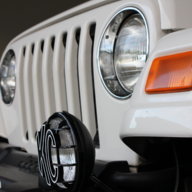
Which is one positive that was addressed many many pages ago
 
Now that we're finally talking tech...

View attachment 362786

the rig on the left will have more a bunch more opportunity for uptravel.

So maybe that's what this boils down to, is prioritizing uptravel vs belly height vs CoG. The subrame rig could match the flat belly rig in uptravel and have similar COG at the cost of a lower belly height, or match belly height with more uptravel at the cost of higher COG. I'm sure this is gonna invite the user of the word "balanced" again but let's just dispense with the idea that "balance" is exactly the same at Windrock vs JV or with a 35" dana 44 build vs 40" stickies on 14 bolts.
 
Status
Not open for further replies.