
You aren't paying attention. A common angle for wood working is 90 degrees and metric flat head screws have a 90 degree angle. 82 degree is the common SAE angle.The joy of being a fastener pedantic.
Close enough is good enough?



You aren't paying attention. A common angle for wood working is 90 degrees and metric flat head screws have a 90 degree angle. 82 degree is the common SAE angle.
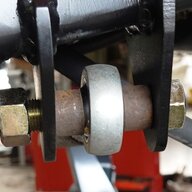
You'll have to see if there is enough room before the bend to get a typical bottom bearing router bit in there. If the base of the router is too big, it will hit the bend in the plate and cause a problem.Close enough is good enough?
Good point about the bend. I can think of a couple ways possible around that depending on the router base and the bit.You'll have to see if there is enough room before the bend to get a typical bottom bearing router bit in there. If the base of the router is too big, it will hit the bend in the plate and cause a problem.
There does exist a top bearing inverted chamfer bit for a router. We use the machinist version to cut the taper in the bottom hole of our steering knuckles since it is wider at the top than the bottom.Good point about the bend. I can think of a couple ways possible around that depending on the router base and the bit.
That's a tough bit to find. It sounds like the easiest and most exciting option. Clamps would be a good idea!There does exist a top bearing inverted chamfer bit for a router. We use the machinist version to cut the taper in the bottom hole of our steering knuckles since it is wider at the top than the bottom.
Another solution that I have considered is taking a piece of 1.5" wide x 1/4" thick 6061 T6, laying out the holes in the frame perfectly in it and then countersinking the holes. Seems counterintuitive but it would get rid of the hang points when you need to slide that area.At least in my case, I am dragging the bolt heads. Not dragging them would make the sliding that much easier. While it can be easily argued that it isn't really worth my time to address compared to other issues, I consider it a small and meaningful refinement that is within my grasp to do.
Only if this strip was welded to the main plate. The countersink allows it to be separate piece that is clamped to the skid.Make the holes big enough for a socket to fit. Wouldn't even need to countersink.
Only if this strip was welded to the main plate. The countersink allows it to be separate piece that is clamped to the skid.
The skid bolts will hold both in place easily. It is just a long skinny washer.Yes, you would have to tack them in place, or drill some holes and use some self taper button head screws to hold the plates in place.

Another solution that I have considered is taking a piece of 1.5" wide x 1/4" thick 6061 T6, laying out the holes in the frame perfectly in it and then countersinking the holes. Seems counterintuitive but it would get rid of the hang points when you need to slide that area.
Another solution that I have considered is taking a piece of 1.5" wide x 1/4" thick 6061 T6, laying out the holes in the frame perfectly in it and then countersinking the holes. Seems counterintuitive but it would get rid of the hang points when you need to slide that area.
Everything about the concept is correct. The issue is the hole in the nutsert below the threads is larger than the threads so that will have to be accounted for. Other than that, it should work.How about this?
The slots shouldn't matter for the specific TJ the skid is installed on. The 03-06 skid bolts are 12mm (0.472in) dia.
Take a 3/8" (0.375in) piloted countersink....
View attachment 80210
Drill America 3/8" X 3/8" 82 Degree Piloted Countersink, WEL Series https://www.amazon.com/dp/B00FXOI4GK/?tag=wranglerorg-20
...and attach a length of brass(?) tube over the pilot, both to extend the pilot into the frame nutsert and to bring the OD closer to 12mm. Then countersink the slot right where the frame hole is.
Everything about the concept is correct. The issue is the hole in the nutsert below the threads is larger than the threads so that will have to be accounted for. Other than that, it should work.

Good idea...except for that head angle thing...Here is a diagram for a Metric Flat SHCS and they specify 90-92 degrees included.How about this?
The slots shouldn't matter for the specific TJ the skid is installed on. The 03-06 skid bolts are 12mm (0.472in) dia.
Take a 3/8" (0.375in) piloted countersink....
View attachment 80210
Drill America 3/8" X 3/8" 82 Degree Piloted Countersink, WEL Series https://www.amazon.com/dp/B00FXOI4GK/?tag=wranglerorg-20
...and attach a length of brass(?) tube over the pilot, both to extend the pilot into the frame nutsert and to bring the OD closer to 12mm. Then countersink the slot right where the frame hole is.
I'll have to check the bolts I have.Good idea...except for that head angle thing...
If they are metric, they will be 90-92 degrees. That is the standard. If you've replaced your nutserts with Imperial threads, then they'll be 80-84 degrees.I'll have to check the bolts I have.





